

The actual kit that went around the world in the World in Six Strings footage. Sixteen months, twelve locations, about $900 all in.

As Jimi Hendrix said, the blues is easy to play but hard to feel. A man jamming on his guitar might not be the most sophisticated thing, but it evokes at times more emotions than an entire band. If, like me, you're fascinated by the Delta blues, then you have been obsessed with the one quality photo of Robert Johnson and his acoustic Gibson on the internet. We might not be able to play his guitar again, but I can guide you to the best guitars for Delta blues sound.
Bottom Line Up-Front: You can play the blues with any guitar, but not all guitars will recreate the Delta sound and feel. The best guitars to play Delta blues are all inspired by instruments of the era but don't have to be vintage.
If you know what to look for in a guitar, you can find hundreds of modern budget alternatives or mid-range modern reissues in any local shop. My goal is to help you find the guitars that best fit your budget.
If you are serious about Delta blues, you can find a pair even for legendary instruments that created the genre.

The Delta Blues was born among the poor Mississippi class. Second-hand instruments and some homemade ones were the norms. The few recordings we have of the time are full of one-note lines, out-of-tune strings, and many buzz notes; this shows that the guitar quality might not have been as good.
Even though the genre is based on 'In between' notes and purposely out-of-tune phrases, you don't need your guitar to do that for you! The skill lies in consciously going out of the scale or having the 'feel' for it.
There's a saying that any guitar is fit for the blues; however, I will list a few perks that make a great blues guitar.
Most Delta blues is played on Open-G or open E tuning. Ideally, you want a guitar that can switch from standard to any of the two without tuning issues. For electrics, it's wise not to go with tremolo bridges.
Slide guitar is tricky to play with low action. A slightly higher action helps avoid frets buzz; however, you have to be careful in picking a guitar that plays well even on higher actions. Consider that you might want to get thicker strings for a fuller tone.
Shape, playability, and tone are all connected in acoustic guitars. The Delta blues has a quality that accepts all guitar shapes, yet some do the job better than others. I recommend Orchestra-shaped small/medium-sized guitars as they tend to be more comfortable in playing and have more than 'glassines' on the tone.
The guitar should not only be meant for delta blues. It should be good enough to sing along with or even play a non-blues gig with.
If your guitar matches the above criteria, the only reason you should for another is if you're serious about playing the blues or don't want to mess with your existing one.
I own three acoustic guitars, yet I only use one of them for Delta blues or slide guitar in general.
The first reason is that the guitar is small and doesn't have the rich acoustic tone I look for when recording in the studio. The second reason is that I don't want to change the tuning on my other guitars, while on these, I'm free to experiment with different open tunings and string gauges.

Harley Benton is proof that cheap guitars can be decent instruments. This guitar costs less than your first instrument but is smartly designed to play Delta blues flawlessly.
The guitar is not as great as it sounds, just like Robert Johnson probably didn't make a pact with the devil to learn the blues. The HB Delta blues lacks the volume and the warm midrange that all good acoustic guitars have. Even though Delta Blues does not need a big body or that much woody acoustic tone, open chords should ideally sound big and full.
Considering the price, though, I can't think of another better

The SG has more blues than any other 'modern' solid body electric. I choose it not only for the perfect neck but for the wide tonal palette PAF pickups can get.
Your guitar must do more than one thing in a real-life gigging situation well. If you're playing a blues show, there's no guarantee it will all be slide guitars and open tuning strumming I-IV-V. The blues is much bigger than that, and this guitar can respond to anything you ask it to do.
It's unbelievably stable and much easier to play with a slide than a Tele or Strat. Even if the specs are the same on paper, the slide and SG go better together than humbucker and distortion.
This guitar is expensive, but you should not be discouraged. Hunt any non-US-made SG, and you won't be disappointed with playability.
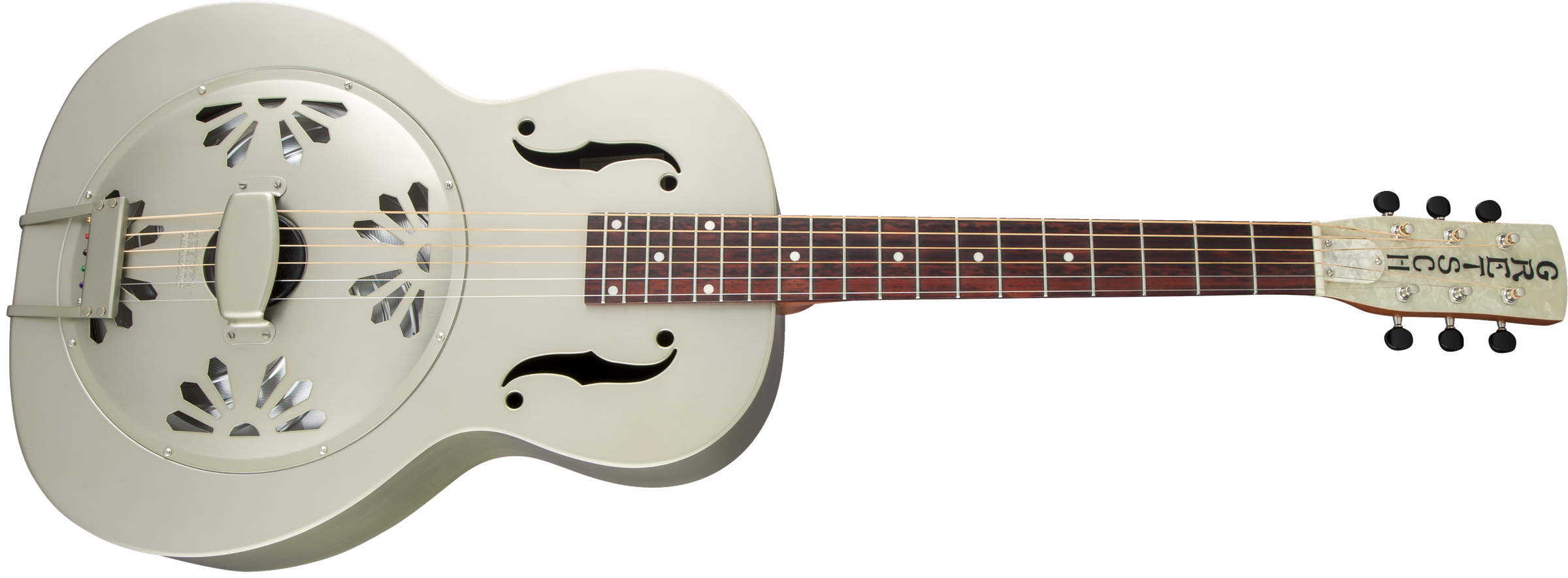
It's obvious a resonator needed to appear on the list; why this, though? The short answer is that I don't think you need a more expensive resonator than the Gretsch G9201 unless you're playing at a very high level.
Resonators are unmatched in what they do, but their usage and sonic range are sometimes limited. You can fit the resonator in Blues, Country, Folk, and rarely in modern settings. An instrument that can do well within that limit is all you need at home or in the studio to play incredible-sounding delta blues licks.
There are three main resonator designs: "Tricone," "Biscuit," and "Single Cone Spider." I choose the Biscuit style because it gives a warmer midrange to the rough metallic sound. The slide sound with a resonator is a unique vintage delta tone that will take you back to the classic recordings.
Good tone is heavy and hard to carry, and so is this guitar, unfortunately. It's worth it, though, as it will overpower in volume, probably any other acoustic instrument you ever played.
Interesting Read: The Best Resonator Guitars.

This round-neck dobro will take your slide playing to the next level. Compared to the Gretsch, I only recommend this guitar to slide players who feel comfortable playing it as a lap steel guitar.
You could play it as a regular guitar, yet I'd recommend setting the action high in open tunings only and specifically using it for typical Delta slide playing.
Dobros are resonator guitars; sometimes, you'll hear the name dobro describing all resonator guitars. The easiest way to think of a Dobro is to consider them wooden acoustic resonator guitars.
Tone-wise, Dobros sound more like regular guitars than metal body resonators due to the wood. This makes the slide sound less harsh and well-rounded. Strumming might even sound more present compared to the darker tone of the Resonator.

If you're serious about Delta blues guitar, this instrument is probably the best modern recreation of Robert Johnson's original Gibson. I must admit though, that most of its high price comes from historical values rather than the guitar's actual worth as an instrument.
It is almost perfect in every way, giving off Delta vibes from the first chord. Small enough to carry it easily from gig to gig without compromising its rich tone. All the tonewoods are aged and handled by the best Gibson luthier in the US.
The electronic system is flat and well hidden on the guitar. It sounds plugged in almost as good as it does unplugged. You can tell, especially when playing open tunings with a slide. The natural reverb of the open strings is amplified from the PA, leaving no need for any fx from the console or pedals.
If you're a touring blues musician or want to get as close as possible to the 100 years old legacy of the Delta sound, few guitars match the Gibson L-00.
The blues is universal and can easily be transferred to other instruments you will most likely find in a local music store.

I first played this guitar, thinking it would sound tiny and thin like most small-bodied instruments. In truth, it was the opposite in every aspect. This is not only a parlor body guitar good for delta blues but an overall quality acoustic guitar.
The only setting I could not use it was in the studio to record open chords. For everything else, it's as good as a small body instrument can get under 1000$.

Most of you might not be very familiar with this guitar as it is a personal choice from my collection. I used this instrument to play most of my blues shows when I started my professional career, and it never disappointed me.
It's not the most classic-looking guitar nor the richer sound, but it's extremely comfortable to play and feels very easy to play slide with. I love that for under 500$, this guitar can get you through an entire acoustic gig of blues, rock, pop, or country.
Answer: Apart from Robert Johnson's Gibsons, Muddy Waters' Telecaster, John Lee Hooker's Epiphone, and Skip James' Gibson J-185 are famous Delta blues guitars.
Answer: Some of the biggest delta blues guitarists and artists are John Lee Hooker, Muddy Waters, Robert Johnsons, Skip James, Bukka White, Blind Willie Johnson, etc.
Answer: After getting your first Delta blues guitar, some easy songs to learn are the following: "Matchbox" by Carl Perkings, "I'm Tone Down" by Freddie King, "Boom Boom' by John Lee Hooker, etc. Fender Play is a great place I recommend learning these songs quickly from.
Before choosing any guitar for Delta blues, I can best advise you to get a feel of the "blue" note in your playing. A good guitar will make you sound better but won't recreate the feel.
It's wise to always go for a guitar inside your budget and only buy a specific delta blues guitar when you can afford other spare ones. Remember that having one guitar dedicated to the genre will make you even more comfortable playing it on stage and push it to its limits.

The actual kit that went around the world in the World in Six Strings footage. Sixteen months, twelve locations, about $900 all in.
Ever hit a G chord that feels bright and settled, then swap to G7, and suddenly it sounds a little…expectant? Like it’s leaning forward, waiting for the next page to turn. That “unsettled” sound is the whole point. G7 is a dominant seventh chord built from G (Root), B (Major 3rd), D (Perfect 5th), and […]
The first time I met B7, my hand froze. Four fingers, tight spacing, and one tiny mistake makes half the chord go dull. That is why I call B7 the Gateway Chord. It pushes your fingers to work as a team. You will hear it in Blues, Folk, Classic Rock, Jazz, and even acoustic metal […]