The actual kit that went around the world in the World in Six Strings footage. Sixteen months, twelve locations, about $900 all in.



So, you want to learn guitar online?
I started learning guitar twenty-some years ago by reading copies of tabs and chord charts alone in my bedroom, praying that I nailed what they taught me for the next time I met with my guitar teacher.
These were one-hour lessons every week. I remember how my teacher recorded licks and examples on an old tape recorder, and I would go through all the recordings by myself. I'd play for hours, trying to remember the little tricks and guidelines my teacher shared.
It was great to have someone there to show me the road to success. As I check out the Fender Play and Justin Guitar platforms, these thoughts go through my mind. These are serious players, teachers, and lessons. But to give you an honest review, I ask myself the question we're all afraid to ask. Do these online guitar learning platforms work?
So, enough of these romantic reminiscences. Let's get on with the subject matter.
Fender Play is the complete app for learning to play acoustic and electric guitar, bass and ukulele. Get started with step-by-step lessons. Use the code “learntoplay50” to get 50% off the annual plan.
Fender Play Online Guitar Lessons Learn How to Play Guitar
 We earn a commission if you make a purchase, at no additional cost to you.
The main differences between Fender Play vs Justin Guitar are:
Are these courses meant for me? If you are a
Both platforms work the same way. You can use the app or the website, although the app is much more interactive.
Both platforms are user-friendly, easy to navigate, and will keep track of your process.
I find myself using both the app and the website. I use the website for convenience while going through the video lessons, but the app is excellent for practicing due to its tools and features.
In my formative years, I wanted to have guidance while practicing, and the app provides that.

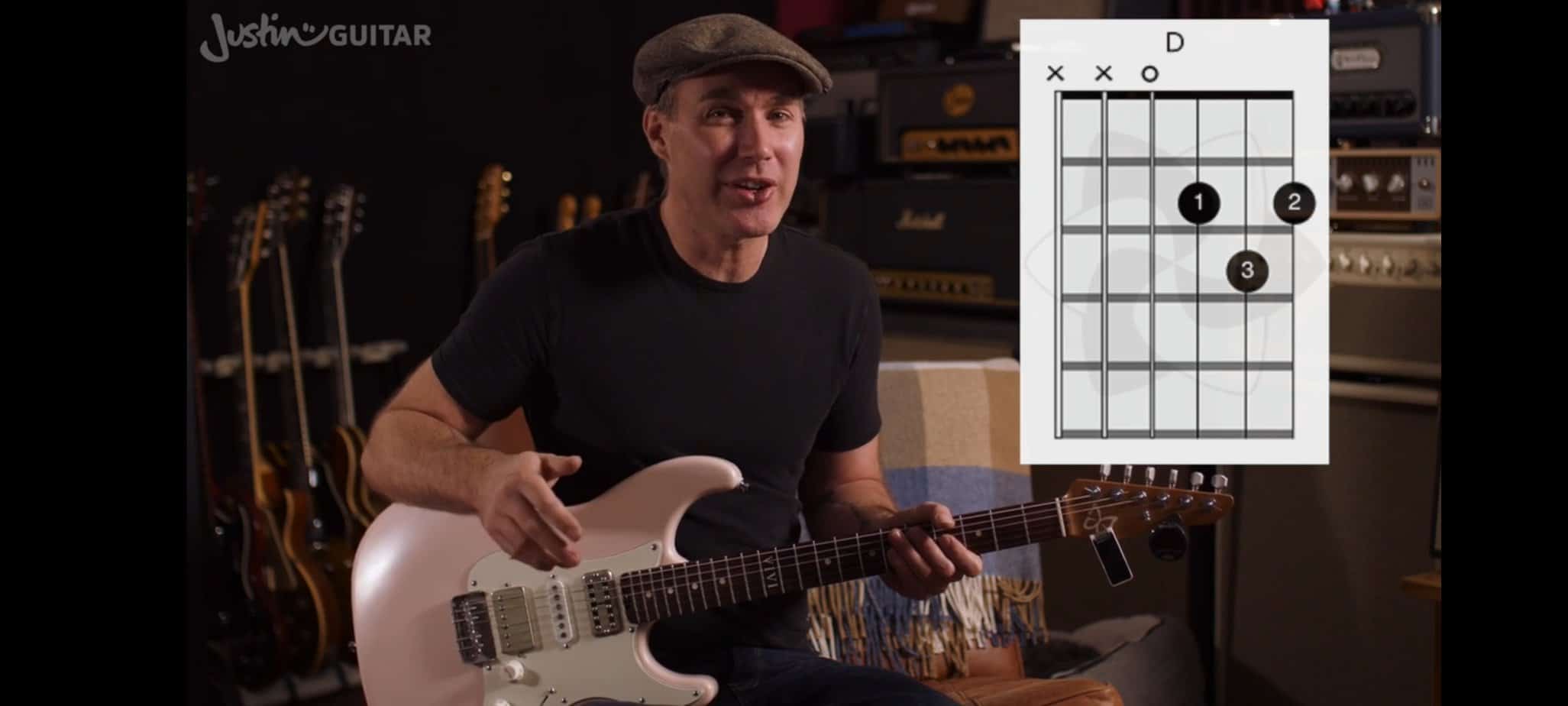
From timers to animations, tabs, and chord charts with images that will clear up any doubt one might have. Both apps are very similar in function; the tuner is accurate and teaches how to tune correctly. The philosophy is to teach you how to accomplish the idea and develop fundamental skills.
I'm immediately impressed by how clear and accessible the information is delivered. For example, it's not just a lesson on 'how to tune' or 'hold an instrument.' There's an explanation, "the reason why," behind every key aspect related to the topic, and the lesson presents the concept in a short, concise video.
For a
The platforms organize their courses into well-thought-out, graded levels. So there's a method starting from a
There are graphic examples of strumming that, if properly followed, will help you learn the song and develop a good sense of rhythm, timing, and subdivisions.
The library is an ongoing growing archive that has developed over time. Sometimes only some of the information to learn the song is available but give it time, and it'll get there.

Not the famous tune by The Who. But who are you as a player, and what are you looking for as a student?
But first, before we get into this, let's understand the history behind the development of these platforms before choosing between them.

Justin Guitar is a platform for beginners obsessed with the guitar and looking to push and go the extra mile right from the start. The platform is easy to understand and navigate. Justin developed every subject comprehensively. The trick lies in the many tips and additional information within each lesson, which adds to the experience.
Justin Guitar has been in development for over a decade, so there's a vast library of lessons available, and it doesn't stop at the
This platform focuses on creating learning and practicing habits based on different musical genres. The users make their choices. This way, the platform's AI aims to keep the beginning player invested and interested throughout the journey.
At this point, it is essential to point out that you can stick to more than just one genre. You can always change and explore to your heart's content. Finally, you can explore other instruments like bass, ukulele, and acoustic guitar.
Both platforms might be similar in structure, but the best way to choose is to have an honest inner reflection and ask yourself, are you a guitar maniac or a music fanatic? It is up to you, remember to have fun, that's the best way to learn.
Fender Play is the complete app for learning to play acoustic and electric guitar, bass and ukulele. Get started with step-by-step lessons. Use the code “learntoplay50” to get 50% off the annual plan.
Fender Play Online Guitar Lessons Learn How to Play Guitar
We earn a commission if you make a purchase, at no additional cost to you.
See how Fender Play compares to other similar platforms:
Learning a song is an excellent way to apply new knowledge and skills, but it depends on how you approach it. These platforms do a great job guiding you, and although they both offer catalogs with hundreds of songs, it is easy to find the right one for you through the many filters like musical genre, level of skills, artist, and more they offer.
The teachers always go the extra mile to give you the information and show you how to work through the different parts. But this is where the apps shine. I found these to be great practice tools. You can slow down the song, remove some layers to understand your part better, use animated examples to clear up doubts, and more.
This platform offers over 700+ songs and counting. It is the result of many years of developing material to satisfy the desire of thousands of students, all with different tastes in music, skills, and needs. Justin knows how to go through a song, get you that thing you want, and teach you how to apply your well-earned knowledge and skills.
These are some problems I found while going through the platform.
This platform offers 1000+ songs. Just like Justin's catalog, it contains titles from various genres and artists. Fender Play chose songs to satisfy thousands of users' different tastes while keeping in mind the playing level and instruction goals: learning new concepts while enjoying the process.
Fender's Live song catalog is one of the platform's main features, giving it a leg up on the countless online guitar lessons sites available today. Here are some of the key features:
Remember to manage your expectations when picking a song to learn. Choosing something beyond your skill and knowledge level can be frustrating. Trust the platforms AI to select songs appropriate for your playing level and genre choice. You'll always find something to work on and enjoy.

Justin is the primary teacher and the heart of the operation, so he doesn't have time to guide you personally. He steers you in the direction of some of his friends and colleagues so you can get personalized lessons. Keep in mind that this is outside the platform and is an extra cost. You have to pay for each class.
There's also a community of students where you can share your progress, doubts, and overall experience. All this is a result of over ten years of construction. Also, sharing your journey with others is essential to keep improving, and your progress can inspire others.

Fender Play works differently, and being new to the game; a few things still need improving. This platform uses different teachers depending on the instrument, style, or level, so you get different views and ways to approach various topics.
Fender Play provides access to the teachers' contact info so the students can contact them with doubts or concerns. It takes time for them to respond, but getting the proper guidance is worth it.
And there are other ways you can interact with the teachers. A great feature you should consider is the Fender Play LIVE events. These transmissions are a great, fun way to expand your ideas and interests or dig deeper into your preferred topics. Think of it like master classes with incredible players and unbelievable guest artists talking about different musical genres, gear, songwriting, etc.
The best thing is that you can enjoy all this content even if you are not a paid subscriber to the platform. You can find it available on Youtube.
Overall, this platform is going to get better, and it is going to develop over time.

For my money Justin Guitar is the winner and with this I’m not suggesting that Fender Play is bad at all.
Justin Guitar is a platform that will take you farther into the realm of playing guitar, guiding you from the bare beginnings all the way up to intermediate levels and creating solid musical skills. Even if you already have previous experience with the instrument there’s a good chance that you will find it useful to go through the basics or even to add a new weapons to your arsenal of licks, riffs and music vocabulary.
The fact that you can find the main core of the content for free through the website is not to be taken lightly. A few times throughout my years as a guitar student I found myself without guidance due to the lack of resources, during these times I never stopped practicing, playing nor looking for new learning material, but my ongoing process was put on a halt while I got money for my weekly guitar lesson. With Justin Guitar you feel that he wants you to learn and you are paying for the extra tools.
The community side of the platform is a key element to enrich your process. Justin is the main source of knowledge for this site but it is important to remember that you will find feedback, different opinions, new approaches and inspiration just by interacting with others.
All around Justin Guitar is a very well sorted on-line platform, it is evident the time and effort that was put on the project and there is no doubt that it will continue developing through the years to come.
Answer: Yes, you can. Platforms like Justin Guitar (over a decade in the game) have been refining the art of online teaching for a long time. The problem doesn't rest in the content. The issues you might encounter are mainly related to yourself and your self-discipline.
If you sign up to either Justin Guitar or Fender Play, it is because you want to learn and do it for your well-being, so don't cheat and skip videos or lessons. There's no need. Also, stay calm with all the information available (courses, lessons, songs). Trust the process. You are going to do fine.
Answer: Up to this point, you already know what I think. Are you a music fan or a guitar nut? But don't sweat it. You don't need to answer this right now. Perhaps you are a little bit curious about the bass guitar as well, so Fender Play might be what you are looking for, but, at the same time, you think that to get good, you have to go deep into the wealth of knowledge that Justin Guitar provides.
Answer: Yes, they do. Depending on your chosen plan, they offer 7- to 14-day free trials. And, if you are disciplined, you can get a good feel for which platform is more comfortable for you.
Don't forget to put a reminder on your calendar to cancel the unwanted trial—nobody likes receiving unwanted charges. You can always switch platforms. No one is going to get their feelings hurt.
Answer: The Justin Guitar subscription model is a little complex from Free to Paid:
• Free on the website, there is a "Donate" button.
• A free app that offers in-app purchases
• Yearly, full-access subscription is $90 (with a 7-day free trial)
• Monthly, full-access subscription $9 (but no free trial)
The Fender Play situation is more straightforward.
• Yearly, full-access subscription $149.99 (14-day free trial plus 10% Fender gear discount)
• Monthly, full-access subscription $19.99 (7-day free trial)
Answer: Many websites claim it will take 3 to 6 months to complete the courses. This answer is based on how much time you invest daily to practice, how fast you can absorb the information, and even your overall guitar skills.
But I know what your genuine concern is. Following the guidelines given by the teachers and taking the lessons to heart, my educated guess as a former guitar teacher is six months to start feeling comfortable playing and confident on your path.

These two platforms were much more interesting than I initially thought I would find them. I expected that you couldn't learn guitar online; I based this on old ideas and preconceived notions. But I realize that I was mistaken.
For the
The convenience of these platforms is undeniable. You can work comfortably from your home or wherever you are. And they are cheaper than paying for one-to-one lessons. However, don't rule out taking private lessons from time to time or even spending quality time with other players. There's a lot to learn just from personal interaction with others. Talking about riffs, gear, techniques, or just watching another person play live will open your mind to a sea of possibilities.
Finally, to better understand these two platforms' commitment to a good-learning experience, let me give you an example: The tuner. You can download a tuner app to your cell phone. The Boss tuner phone app is based on the classic pedal and is the one I have on my phone. It looks good, and it works just fine, but you will learn nothing from it other than your guitar tuning might need to be adjusted.
The tuners provided by both Fender Play and Justin Guitar will teach you how to tune. You can choose a specific string, listen to the pitch you are aiming for, and, finally, go for the automatic mode to adjust your tuning faster when you feel you know what you are doing. You learn from a simple tool.
I hope this article helps you make the best platform choice and encourages you to get started and fulfill a dream of guitar goodness. Thank you for reading, and good luck.
Fender Play is the complete app for learning to play acoustic and electric guitar, bass and ukulele. Get started with step-by-step lessons. Use the code “learntoplay50” to get 50% off the annual plan.
Fender Play Online Guitar Lessons Learn How to Play Guitar
We earn a commission if you make a purchase, at no additional cost to you.

The actual kit that went around the world in the World in Six Strings footage. Sixteen months, twelve locations, about $900 all in.
Ever hit a G chord that feels bright and settled, then swap to G7, and suddenly it sounds a little…expectant? Like it’s leaning forward, waiting for the next page to turn. That “unsettled” sound is the whole point. G7 is a dominant seventh chord built from G (Root), B (Major 3rd), D (Perfect 5th), and […]
The first time I met B7, my hand froze. Four fingers, tight spacing, and one tiny mistake makes half the chord go dull. That is why I call B7 the Gateway Chord. It pushes your fingers to work as a team. You will hear it in Blues, Folk, Classic Rock, Jazz, and even acoustic metal […]