

The actual kit that went around the world in the World in Six Strings footage. Sixteen months, twelve locations, about $900 all in.
Ever strummed G, C, and D and thought, “Wow, that works!” Then tried A♭ and winced?
That’s not bad luck…it’s harmony doing its thing. Harmony happens when notes sound together, like chords on your guitar or keyboard. Some combinations click naturally while others feel off.
If you’re stuck guessing which chords fit and tired of trial and error, this guide’s for you. We’ll break down keys, show you which chords belong together, and teach you progressions used in real songs.
By the end, you won’t just play chords…you’ll understand why they sound good together. Let’s make your practice sessions sound like music.
If there’s one concept every
It’s kind of like choosing a mood or a vibe before you start writing. Once you’ve picked your key, you’re working within a set of notes that all fit together.
Think of a key as a musical “color palette.” Just like a painter sticks to certain shades to keep a painting feeling balanced, a musician uses the notes in a key to keep their music sounding smooth and connected.
Most songs are built from a seven-note major scale, and each key has its own version.
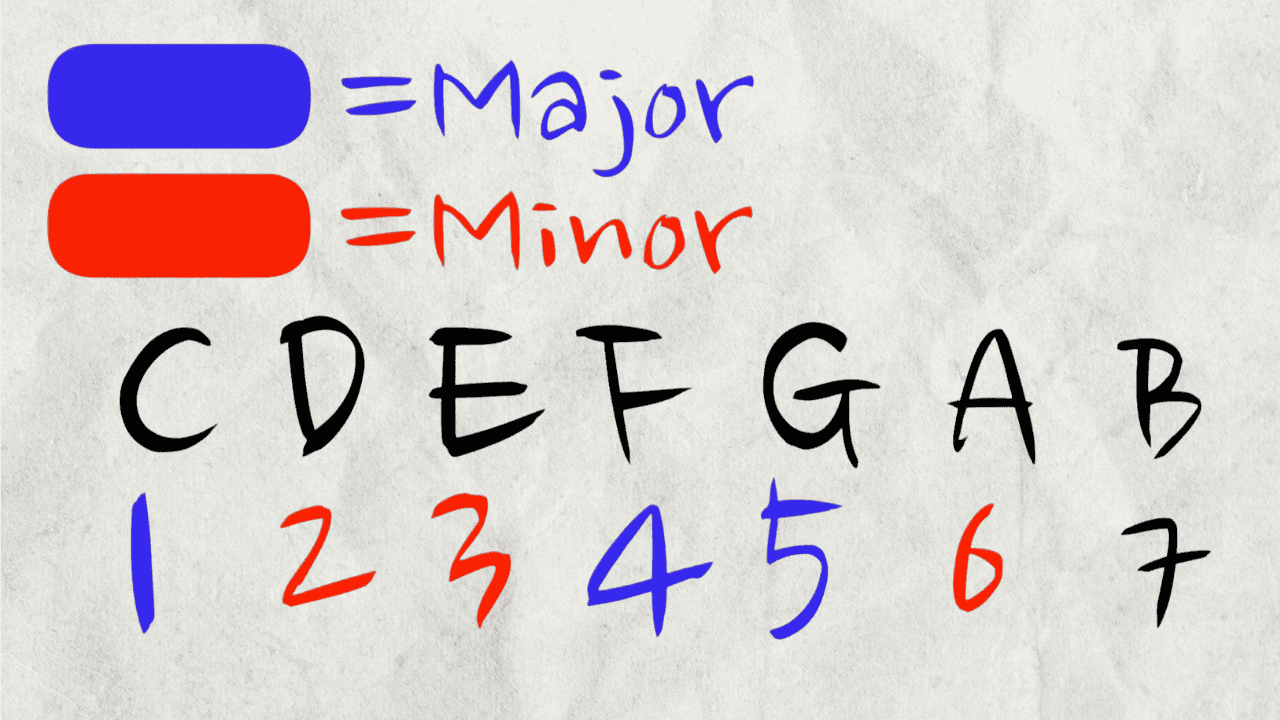
For example, the C major scale (the easiest one to visualize) goes like this: C - D - E - F - G - A - B. Those seven notes form the foundation for every chord and melody in the key of C. If you stick with them, you’ll already be halfway to writing something that sounds good.
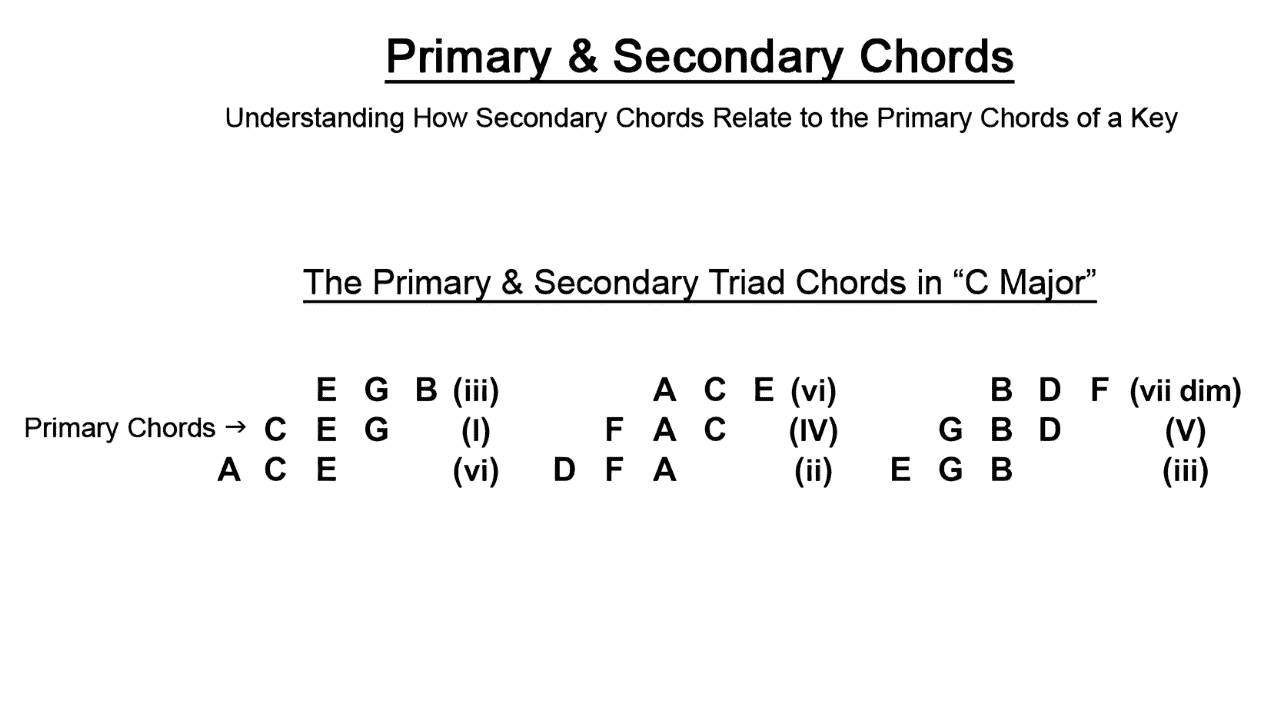
Once you’ve got your seven notes from the major scale, you can start stacking them into chords. Each note in the scale becomes the root of its own chord, and this group of chords is called the diatonic chord family. These are the chords that naturally “live” in the key and play well together.
Every major key follows a fixed pattern of chord types. Here’s the universal formula that works no matter what key you’re in:
Major - minor - minor - Major - Major - minor - diminished
Or, using Roman numerals to mark their position in the scale:
I - ii - iii - IV - V - vi - vii°
Let’s break it down using the C major scale (C - D - E - F - G - A - B). These are the chords you get:
Now, not all of these chords carry the same weight in most songs. Some are stronger, more stable, while others add emotion or contrast.
These three chords form the core of most progressions. They’re the ones that sound the most stable and familiar:
These chords add contrast, mood, and emotional weight. They’re not the main focus, but they shape the way a song feels:
Together, these primary and secondary chords give you all the tools you need to create real, expressive music without stepping outside the key.
If you only learn one set of chords as a beginner, make it the I, IV, and V. These three chords are the foundation of most popular music, from old-school rock to modern pop. They’re simple, powerful, and incredibly versatile.
Here’s why they work so well together:
The I chord (the tonic) feels like home. It’s stable, peaceful, and complete. The V chord (the dominant) is the opposite…it creates tension and feels like it needs to resolve back to the I.
This push and pull gives your music direction.
The IV chord adds movement and contrast without breaking the mood. You can actually hear this in action. Try strumming: C - G - C
Hear that feeling when G (the V chord) pulls you back to C? That’s musical gravity at work. It’s called the Dominant-to-Tonic relationship, and it’s one of the strongest forces in music.
These three chords alone can take you far. In fact, tons of famous songs are built using nothing but I, IV, and V. A few classics to try:
If you’re just getting into writing or covering songs, start here. This 3-chord combo is your golden ticket.
Once you’ve got a handle on the I, IV, and V chords, it’s time to bring in the secondary chords.
These add emotional depth and variety, helping you create chord progressions that feel more personal, expressive, and interesting. This is where your music starts to really come alive.
One of the most used and most loved progressions in modern music is the I - V - vi - IV pattern. In the key of C, that gives you: C - G - Am - F
This progression has been used in everything from heartfelt ballads to upbeat anthems. Songs like “Let It Be,” by The Beatles, “Don’t Stop Believin’,” by Journey, and “No Woman No Cry,” by Bob Marley all rely on this familiar flow. It’s catchy, emotional, and easy to sing over.
Now, flip it around a bit to vi - IV - I - V: Am - F - C - G
This creates a more introspective, reflective vibe…great for moodier songs or when you want to shift the tone. You’ll hear this in tracks like “Apologize,” by OneRepublic and “Numb,” by Linkin Park. Same chords, different order…totally different feeling.
There are a few more progressions worth trying, such as:
These patterns aren’t just theory…they’re the building blocks of real songs that people know and love. Once you start using them, your music will start to sound intentional and familiar, without feeling like a copy of someone else’s work. It’s all about how you play them.
Here’s some relief…there’s no need to memorize the chords for every key out there. Instead, remember this one simple pattern:
I - ii - iii - IV - V - vi - vii°
This formula works in every major key. Once you’ve learned how to build chords from the scale, the same pattern repeats, just with different starting notes.
Let’s take a look at the Key of G Major, which is a go-to for many guitar players because it fits nicely under the fingers and uses mostly open chords.
The G major scale is:
G - A - B - C - D - E - F♯
Now, plug those into our formula:
With those six main chords (I through vi), you can build hundreds of songs. It’s just a matter of mixing and matching them to create different moods and rhythms.
Now that you know the system, you’re not locked into just C or G. You can apply this same method to other
You’ve basically got the master key to songwriting.
Now that you’ve got the chords and progressions down, it’s time to put them to work. These simple rules will help you build progressions that actually sound like songs, not just random chord changes.
Once you’re comfortable, you can start bending the rules a bit. This is where things get interesting.
Little changes like these go a long way. They keep your progressions from sounding too predictable and give your songs more personality.
You now understand what a key is, how to find its chord family, and how to build progressions that actually sound good. That’s a big step forward. You’re not just playing chords anymore…you’re thinking musically.
Try this: pick the key of D major and figure out its I, ii, iii, IV, V, and vi chords. Write a short progression and see how it feels to your ear. Compare something like D - A - Bm - G with D - Bm - G - A.
Hear the difference? Share your favorite progression in the comments, and feel free to explore with online tools!

The actual kit that went around the world in the World in Six Strings footage. Sixteen months, twelve locations, about $900 all in.
Ever hit a G chord that feels bright and settled, then swap to G7, and suddenly it sounds a little…expectant? Like it’s leaning forward, waiting for the next page to turn. That “unsettled” sound is the whole point. G7 is a dominant seventh chord built from G (Root), B (Major 3rd), D (Perfect 5th), and […]
The first time I met B7, my hand froze. Four fingers, tight spacing, and one tiny mistake makes half the chord go dull. That is why I call B7 the Gateway Chord. It pushes your fingers to work as a team. You will hear it in Blues, Folk, Classic Rock, Jazz, and even acoustic metal […]