

The actual kit that went around the world in the World in Six Strings footage. Sixteen months, twelve locations, about $900 all in.

Many beginners look at chord diagrams and wonder why their fingers don’t seem to bend the way the chart suggests. The soreness is real, but guitar playing is more about simple shapes that repeat.
Most of these shapes are called open chords, played near the headstock with some strings ringing freely. They’re the base of nearly every style you hear. Even better, a huge portion of popular songs rely on just a small group of them.
In this guide, you’ll learn the core major and minor chords, the starter version of F, and a few tips that help your hands move with less strain.
When you look at a chord chart, think of it as a simple map of the guitar neck. The vertical lines represent the strings, and the horizontal lines mark the frets. Once that picture settles in your mind, the chart feels far less confusing.
You’ll also notice small symbols above the grid: an O means you play that string open, while an X means you avoid strumming it. Paying attention to those markings helps keep your sound clear.
Most diagrams also label which finger to use, with numbers running from your index as 1 through your pinky as 4.
These three shapes show up everywhere in pop, folk, and country. Many players learn them long before anything else because they sit so naturally together and form the base of countless progressions.
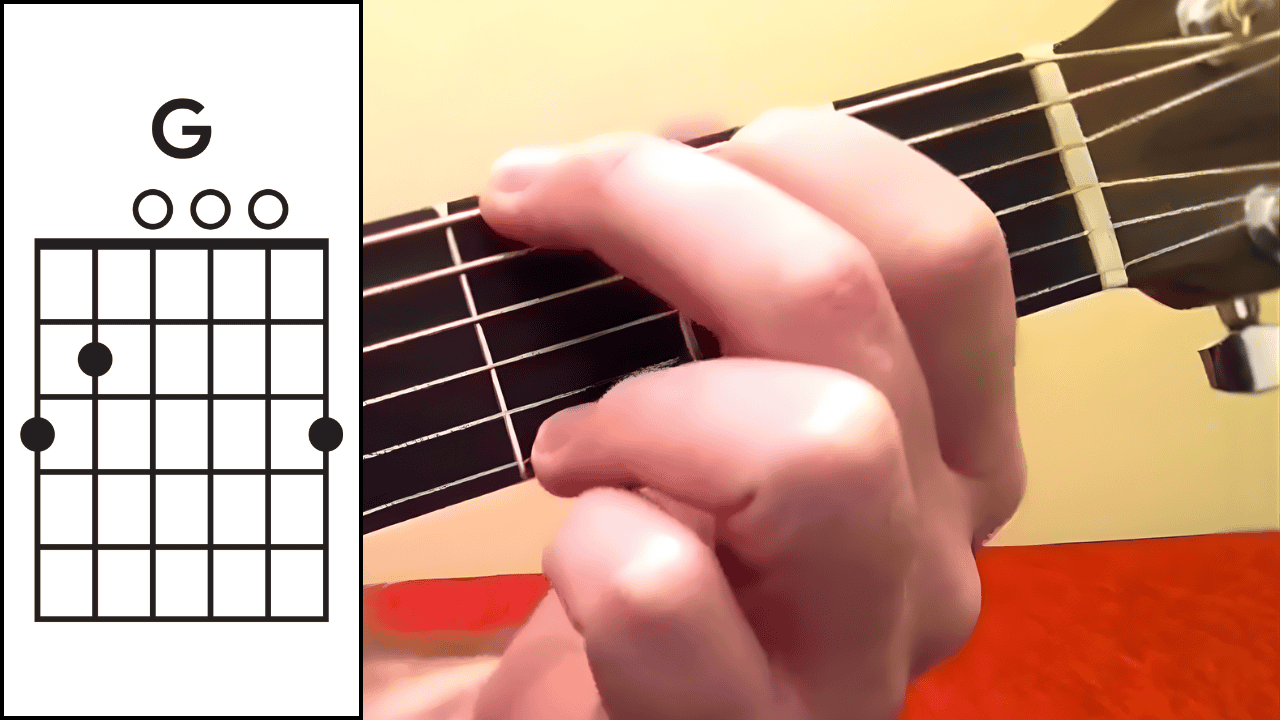
G Major has a full, ringing tone that fills a room with very little effort. It appears in thousands of songs across decades.
For beginners, the stretch between the low and high strings can feel awkward at first, but it improves with time. Many players use the “rock” fingering…ring and pinky on the top strings to make switching to C Major smoother.
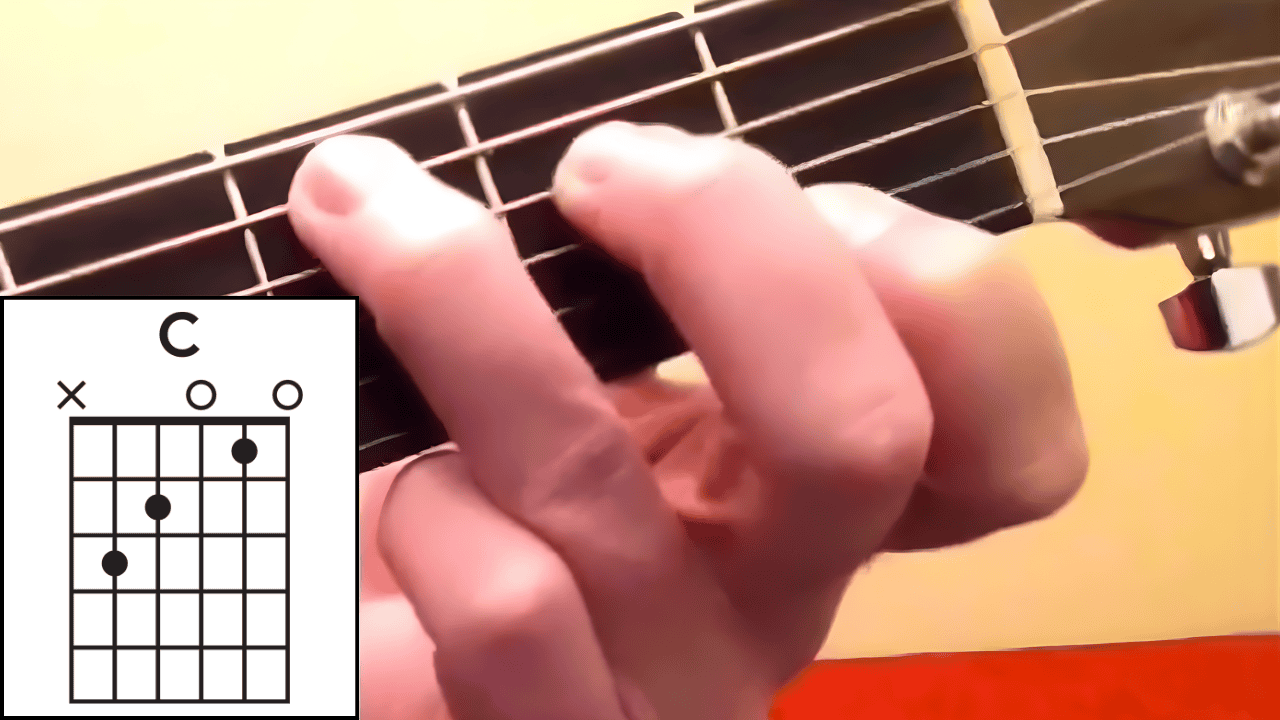
C Major offers a warm, familiar sound that fits perfectly into pop melodies and slower acoustic parts. The most common issue early on is accidentally muting the high E string with the side of the palm. A small lift of the hand usually solves it and gives the chord the clarity it needs.
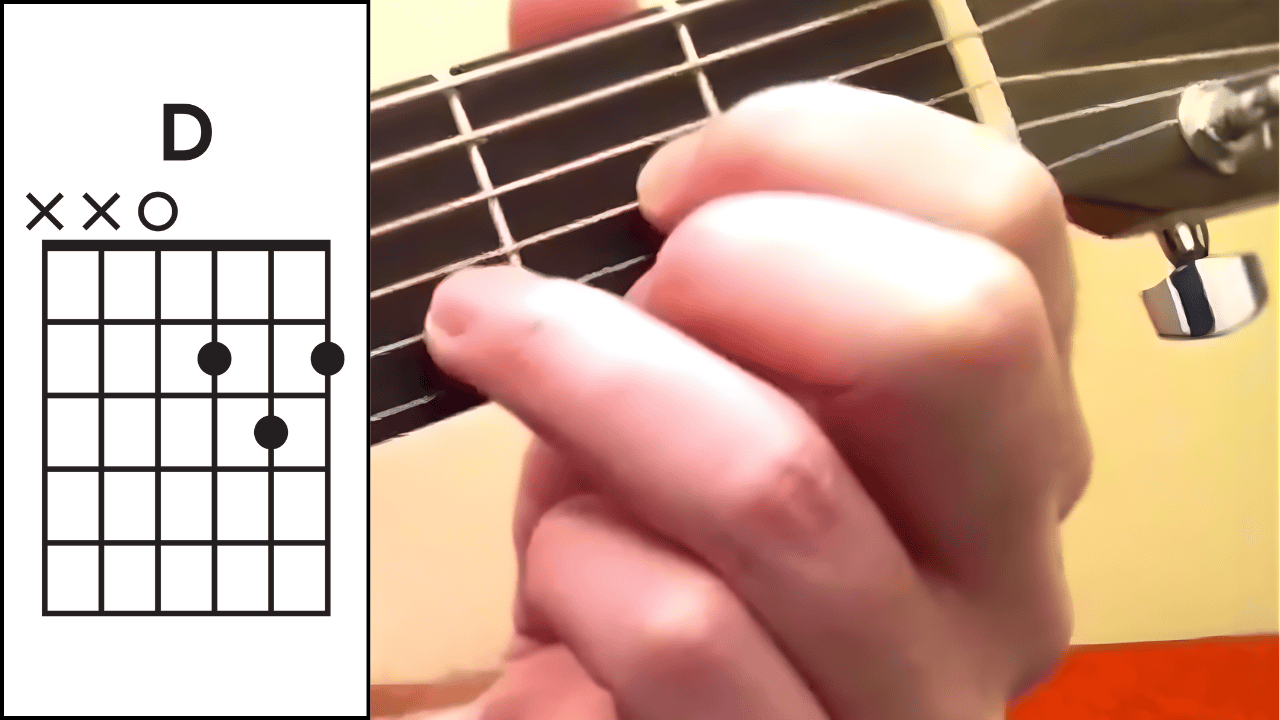
D Major brings a bright, upbeat tone that stands out in both strumming and picking patterns. It’s a compact shape but very expressive when played clean. Just make sure to strum only the top four strings; hitting the low ones can muddy the chord’s lively feel.
A and E form the backbone of many classic rock and blues rhythms. They’re simple shapes, but they carry a strong, familiar sound that works in slow grooves and louder strumming.
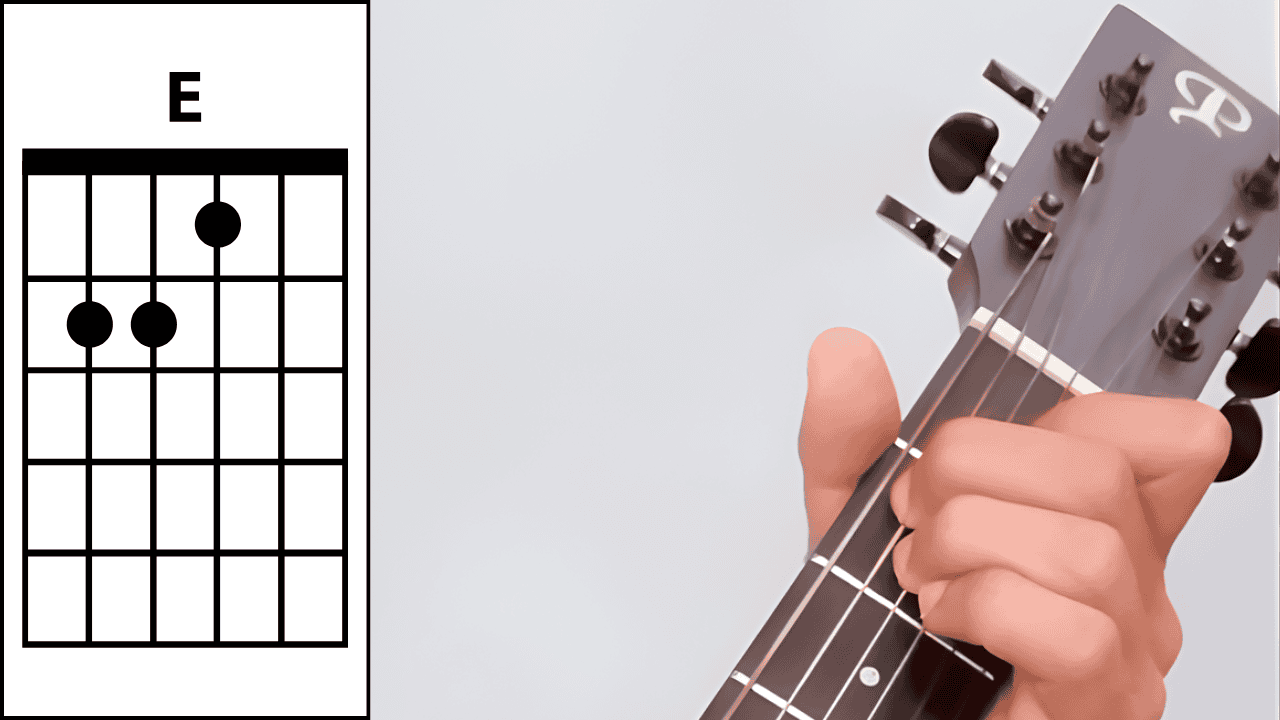
E Major is one of the easiest chords to strum because you can hit all six strings without worrying about accidental bass notes. It also lays the groundwork for future barre chords since the full barre version uses the same shape shifted up the neck. Learning this early gives you a smoother transition when you start tackling more advanced forms.
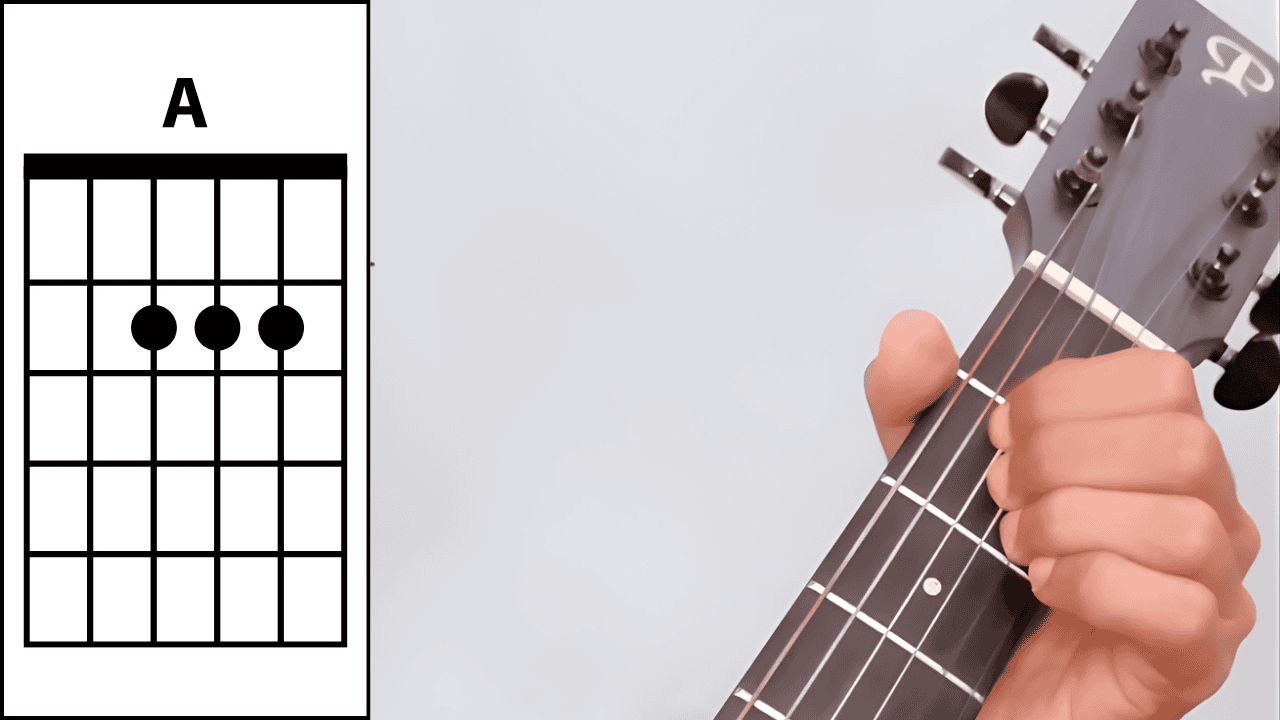
A Major sits neatly on the second fret, which makes the idea of the chord simple to grasp. The tight spacing, though, can feel crowded when you try to fit three fingers into one spot.
Players with broader fingers sometimes use a partial barre and press the D, G, and B strings with one finger. You’ll hear this chord in tunes like “Wild Thing,” by The Troggs, and “Spirit in the Sky,” by Norman Greenbaum, which makes it a great shape to practice right away.
Minor chords bring a softer, emotional color to your playing. They can make a simple progression feel heavier, sadder, or more reflective, which is why so many slower songs rely on them.
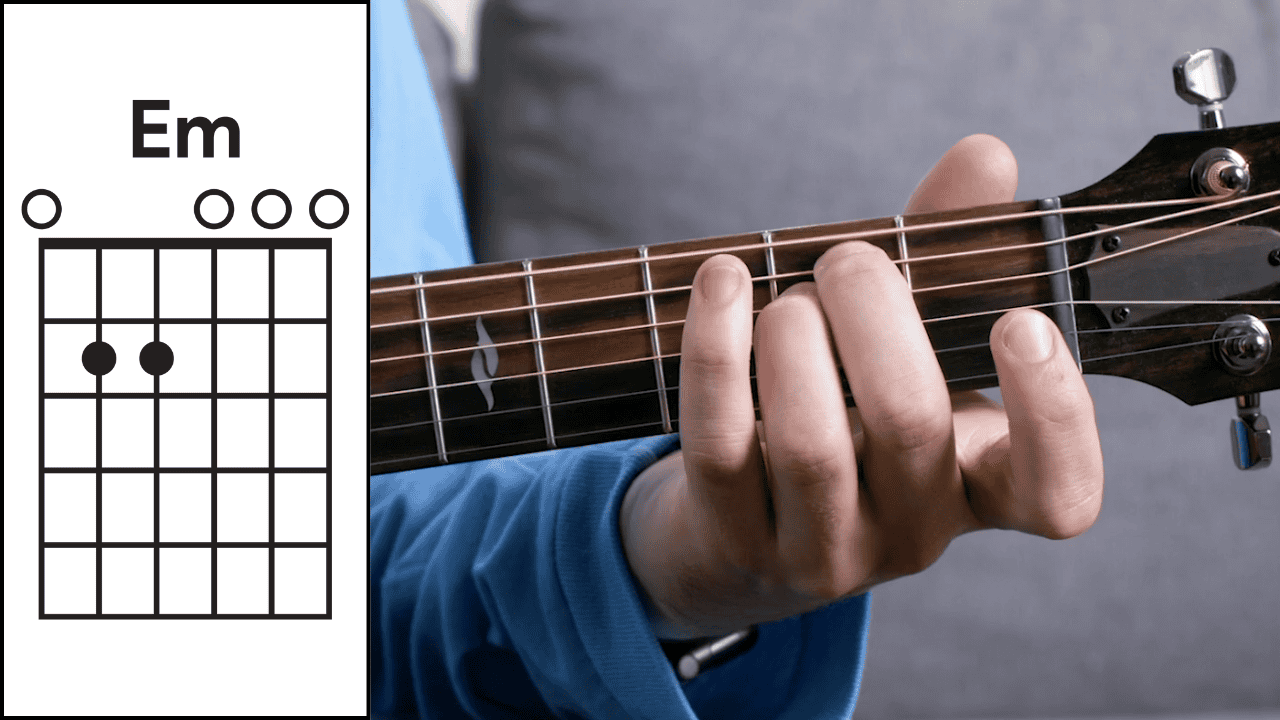
E Minor is the simplest chord you’ll learn, using just two fingers while allowing you to strum all six strings. It shares most of its shape with E Major, which makes switching between the two very smooth. Its darker tone works well in moody sections or as a contrast to brighter major shapes.
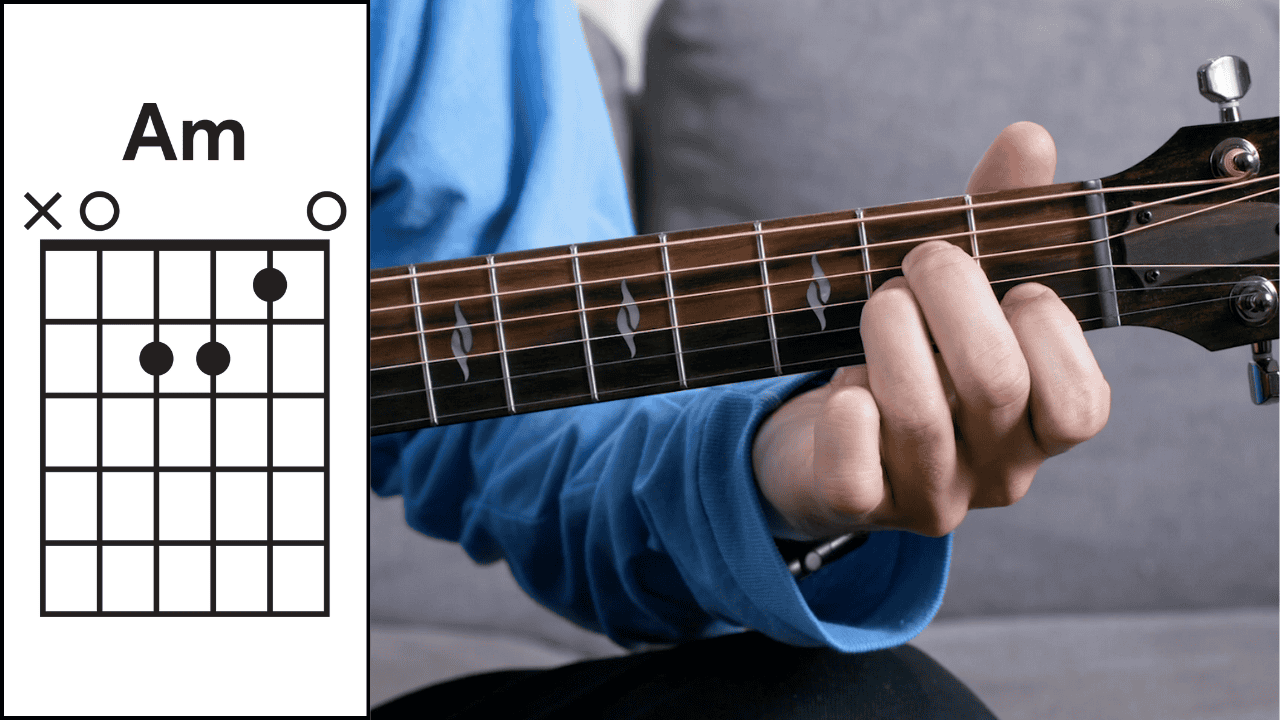
A Minor carries a gentle, sorrowful sound and is often the first chord that gives beginners that “sad song” feeling. The nice thing is that it uses the exact same finger layout as E Major…just shifted one string lower. That makes transitions feel natural and quick once your hand gets used to the move.
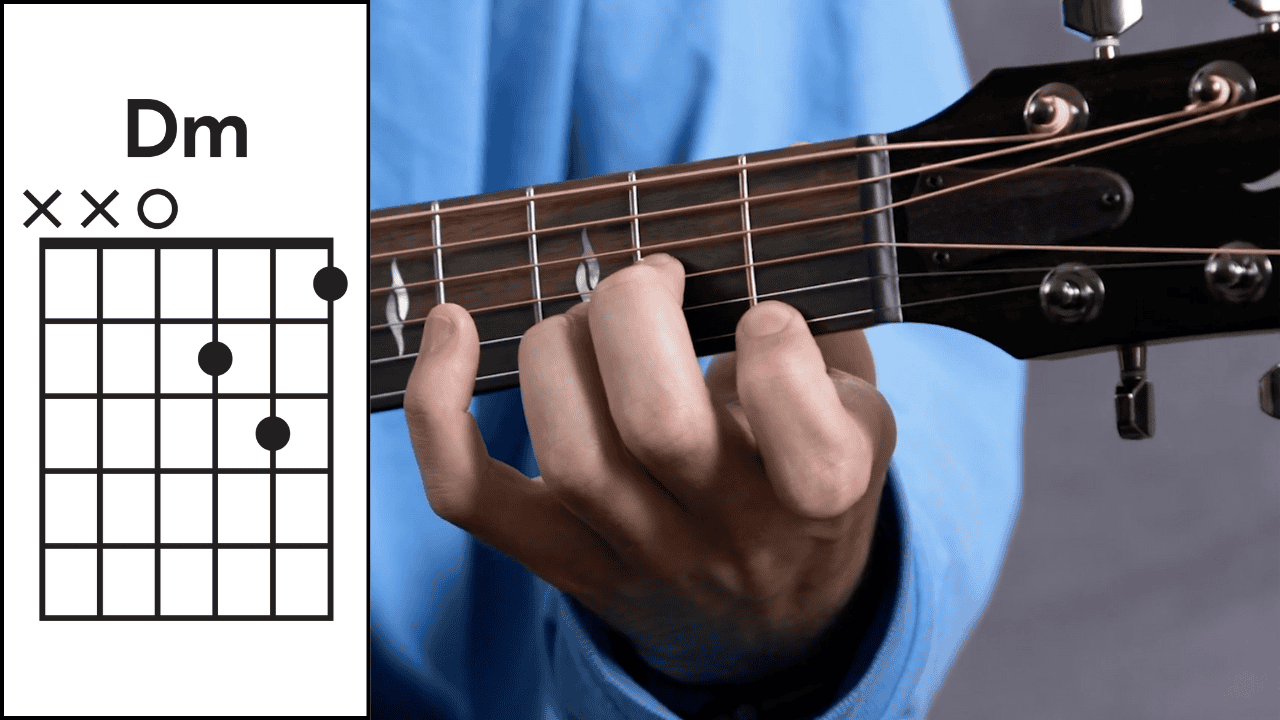
Many players consider D Minor the most emotional of the open chords. It’s perfect for folk lines, ballads, and anything that needs a touch of sadness. The challenge is keeping a clean arch in your fingers, especially on the high strings. A slight wrist adjustment usually helps everything ring the way it should.
F Major often feels like a tough wall for beginners, mostly because the full barre version demands hand strength that usually isn’t there yet. Many new players try it, hear buzzing, and think they’re doing something wrong. A simpler starting point is the “Mini F” shape, written as xx3211.
This version keeps the important notes of the chord without the tension of holding down all six strings. It’s a friendly shortcut that lets you play real songs right away. As your fingers grow stronger, you can gradually work toward the full barre shape with more confidence.
Once you’ve learned the core chords, the real fun begins. Progressions show you how these shapes flow together, and even the simplest patterns can unlock a long list of recognizable songs.
A classic pattern built from G–D–Em–C, this sequence appears in “Don’t Stop Believin’” along with countless modern tunes. It’s smooth, familiar, and one of the easiest ways to start sounding musical right away.
This short pattern is a favorite among acoustic players. To move through it faster, keep an anchor finger planted during the switch between G and C. That small habit makes transitions cleaner and saves time as your hand shifts between shapes.
Small adjustments can make a huge difference in how clearly your chords ring out. These simple habits help you tighten your technique and avoid common
You’ve now seen the Essential Eight open chords (five major and three minor) that carry most of the songs in pop, folk, blues, rock, and country. These simple shapes are the building blocks for nearly everything you’ll play as a
The best way to lock them in is to put them into motion. Pick one of the progressions from earlier and run through it for ten minutes today. Don’t just read about the chords…grab your guitar and try them.

The actual kit that went around the world in the World in Six Strings footage. Sixteen months, twelve locations, about $900 all in.
Ever hit a G chord that feels bright and settled, then swap to G7, and suddenly it sounds a little…expectant? Like it’s leaning forward, waiting for the next page to turn. That “unsettled” sound is the whole point. G7 is a dominant seventh chord built from G (Root), B (Major 3rd), D (Perfect 5th), and […]
The first time I met B7, my hand froze. Four fingers, tight spacing, and one tiny mistake makes half the chord go dull. That is why I call B7 the Gateway Chord. It pushes your fingers to work as a team. You will hear it in Blues, Folk, Classic Rock, Jazz, and even acoustic metal […]