The actual kit that went around the world in the World in Six Strings footage. Sixteen months, twelve locations, about $900 all in.



The Dm7 chord has a dreamy, jazzy flavor that instantly makes your playing sound more soulful. You’ve probably heard it in R&B, funk, pop, and even classic rock. The good news is that while “minor seventh” might sound complicated, this chord is very approachable.
In this article, we’ll break down what the Dm7 actually is, show you four easy-to-play shapes across the fretboard, share some practice tricks, and give you a list of songs that use it so you can jam right away.
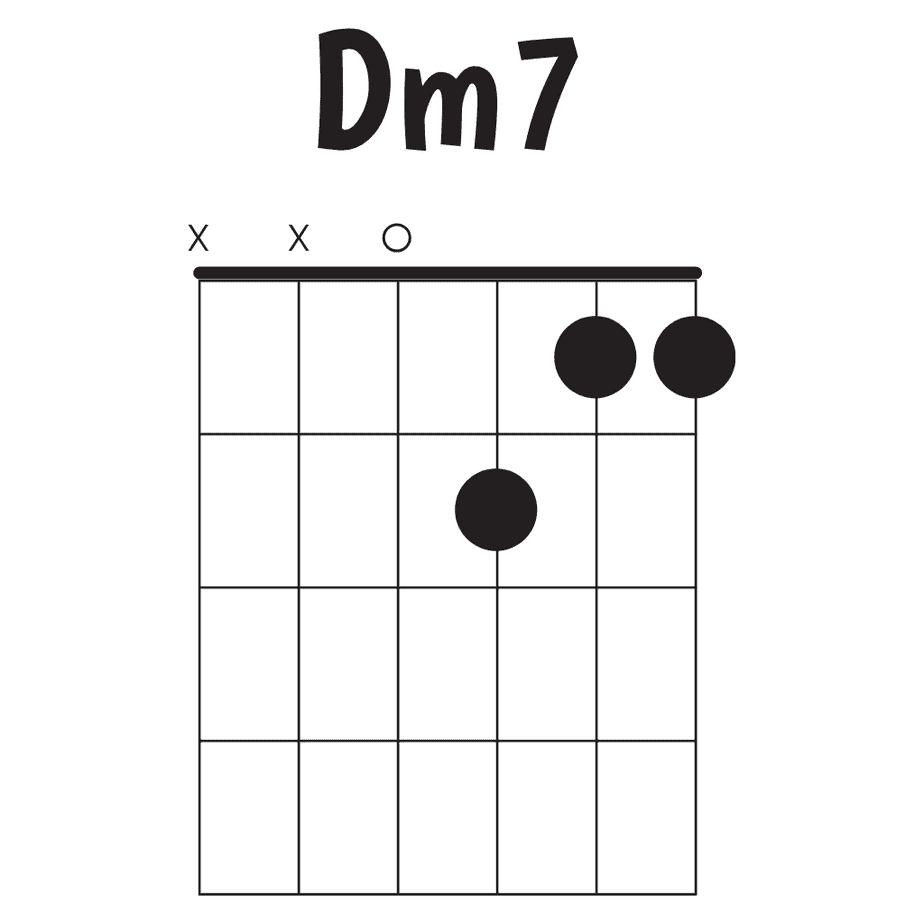
The name Dm7 stands for D minor seventh. At its core, it’s a D minor chord with an extra note added to give it a warmer, more colorful tone. If you’ve played a plain D minor before, you’ll find this version softer and smoother, making it a favorite in jazz, R&B, and soulful ballads.
If we break it down step by step, you’ll see exactly how the chord is built:
Compared to a regular D minor chord, the Dm7 feels less dark and more sophisticated. It carries a smooth, melancholic vibe that works beautifully in progressions, giving songs a relaxed yet expressive mood.
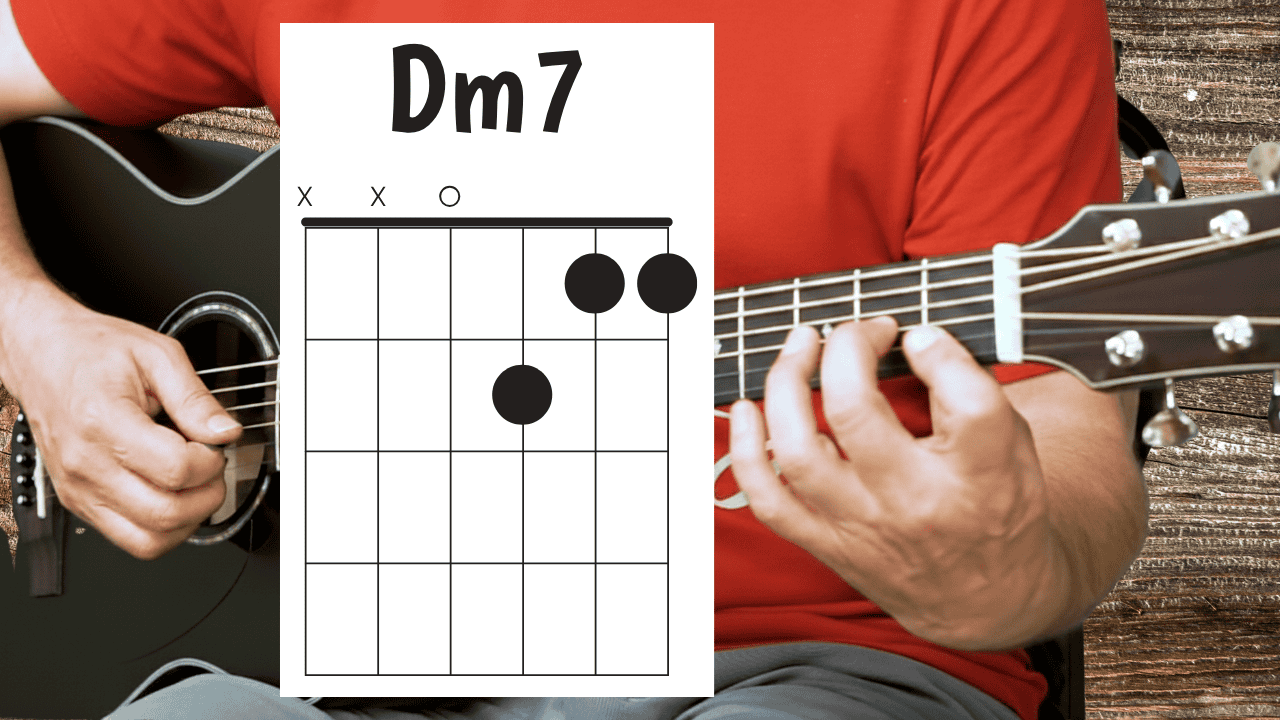
The Dm7 can be played in several shapes across the neck, each offering a slightly different feel and use. Some versions are open chords that beginners will find approachable, while others are barre chords that give more flexibility and allow you to move the shape anywhere on the fretboard.
This is the go-to Dm7 shape for many players because it sits right in the open position and has a sweet, smooth tone. It’s also one of the easiest to remember since it’s close to a regular D minor chord.
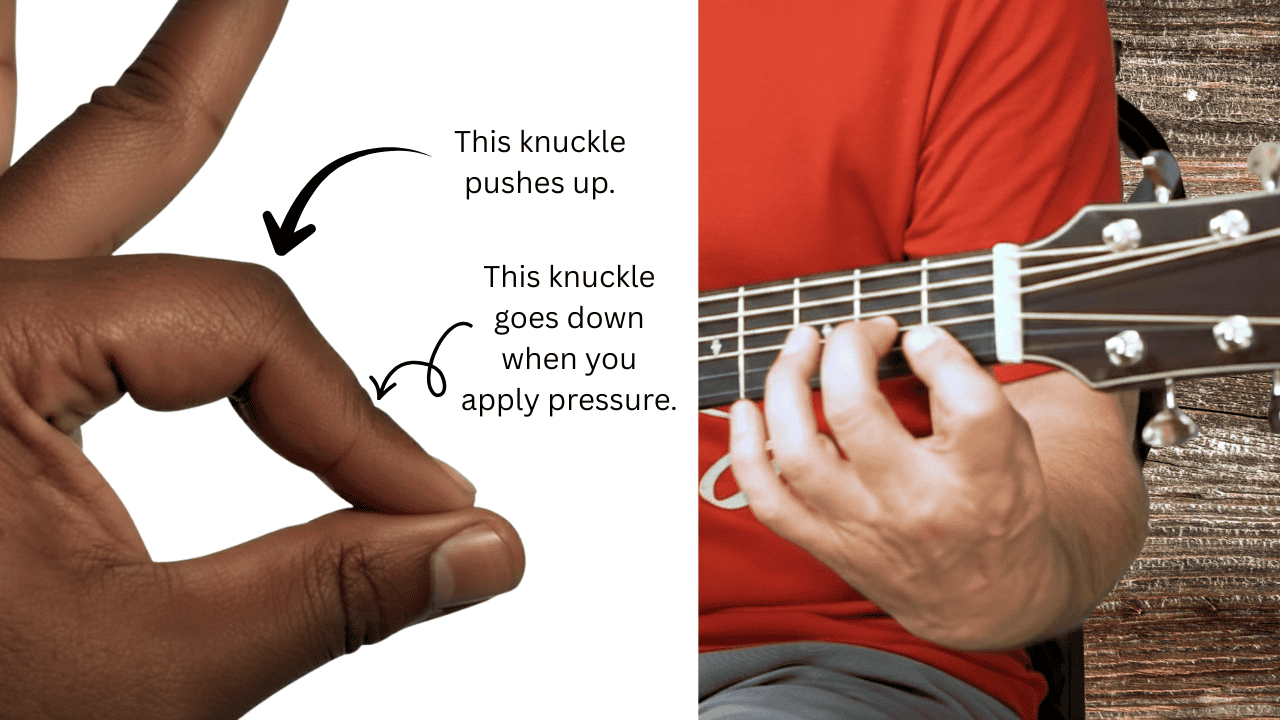
Pro Tip: Roll your index finger back so the bony edge presses the strings…this helps you get a clean sound without muting.
If the mini-barre feels uncomfortable, this version is a great alternative. It spreads the work across three fingers, making it a good stepping stone while you build strength.
This version may take more fingers, but it often feels easier for beginners to press cleanly.
This shape shifts the Dm7 up the fretboard and uses the A string as the root. It’s a moveable version, so once you master it, you can slide it to play other minor seventh chords.
Because it’s movable, this shape is a building block for understanding how chords connect across the neck.
This version is based higher up the neck and uses the E string as the root. It’s bright, tight, and works especially well for funk or R&B rhythm parts.
Since this shape comes from the open Am7 chord, it should feel familiar once you practice it a few times.
Once you know the shapes, the next step is making them sound clean and natural in your playing. A few focused practice methods can make a big difference in how quickly the Dm7 becomes second nature.
Start by playing each string in the chord one at a time. If you hear buzzing or a muted “thud,” it usually means your finger pressure or angle needs adjusting.
Try pressing with your fingertips right behind the fret rather than in the middle of the space. Small changes like this can make every note ring clearly.
A great way to build muscle memory is to form the chord, strum once, then release your grip completely. Repeat this slowly and consistently. Instead of just holding the shape down, this method teaches your fingers to find the chord naturally every time you form it.
Smooth changes are where the Dm7 really comes alive in music. Use a metronome and start at a slow tempo, focusing on moving between chords cleanly. Over time, increase the speed once it feels comfortable.
Practicing these progressions helps you hear the Dm7 in context while also training your hand to move efficiently.

One of the best ways to lock in a new chord is by hearing and playing it in real songs. The Dm7 shows up all over popular music, from timeless ballads to funky R&B tracks.
Here are some well-known songs where you’ll run into it, giving you both practice material and inspiration.
These tunes keep the chord shapes simple and are great for building confidence:
If you’re ready for a little more challenge, these songs use Dm7 in progressions that stretch your rhythm and chord-changing skills:
Playing along with recordings of these songs will not only help with chord changes, but also train your ear to recognize the smooth sound of Dm7 in real music.
The Dm7 is built from D-F-A-C, and it adds a soulful, jazzy layer to your guitar playing. You now know four different shapes, from the simple open chord to the movable barre versions, so you can play it across the fretboard.
If you’re new, start with the open shape. Once you’re comfortable, challenge yourself with the barre versions. Then, try practicing with one of the songs listed above.
What about you? Which Dm7 shape feels most comfortable under your fingers? Or, do you already have a favorite song that uses this chord?

The actual kit that went around the world in the World in Six Strings footage. Sixteen months, twelve locations, about $900 all in.
Ever hit a G chord that feels bright and settled, then swap to G7, and suddenly it sounds a little…expectant? Like it’s leaning forward, waiting for the next page to turn. That “unsettled” sound is the whole point. G7 is a dominant seventh chord built from G (Root), B (Major 3rd), D (Perfect 5th), and […]
The first time I met B7, my hand froze. Four fingers, tight spacing, and one tiny mistake makes half the chord go dull. That is why I call B7 the Gateway Chord. It pushes your fingers to work as a team. You will hear it in Blues, Folk, Classic Rock, Jazz, and even acoustic metal […]