

The actual kit that went around the world in the World in Six Strings footage. Sixteen months, twelve locations, about $900 all in.

It's not long into your guitar journey before you inevitably encounter 7th chords and start wondering how to play them right. As a self-taught player who started learning online and is now a studio musician and teacher, I understand the confusion beginners feel; that's why today I will run you through a step-by-step guide of how to play the E7 chords - probably the first 7th chord you need to learn.
Besides the fingerings, my goal is to ensure you play the chord cleanly, without any buzz or muted notes. I will also show you how to achieve this, eliminating wrist pain and sore fingers as much as possible.
Pick up the guitar and try to follow along with the tips, challenges and tricks I will share here.
Let's start with a reminder on the E Chord:
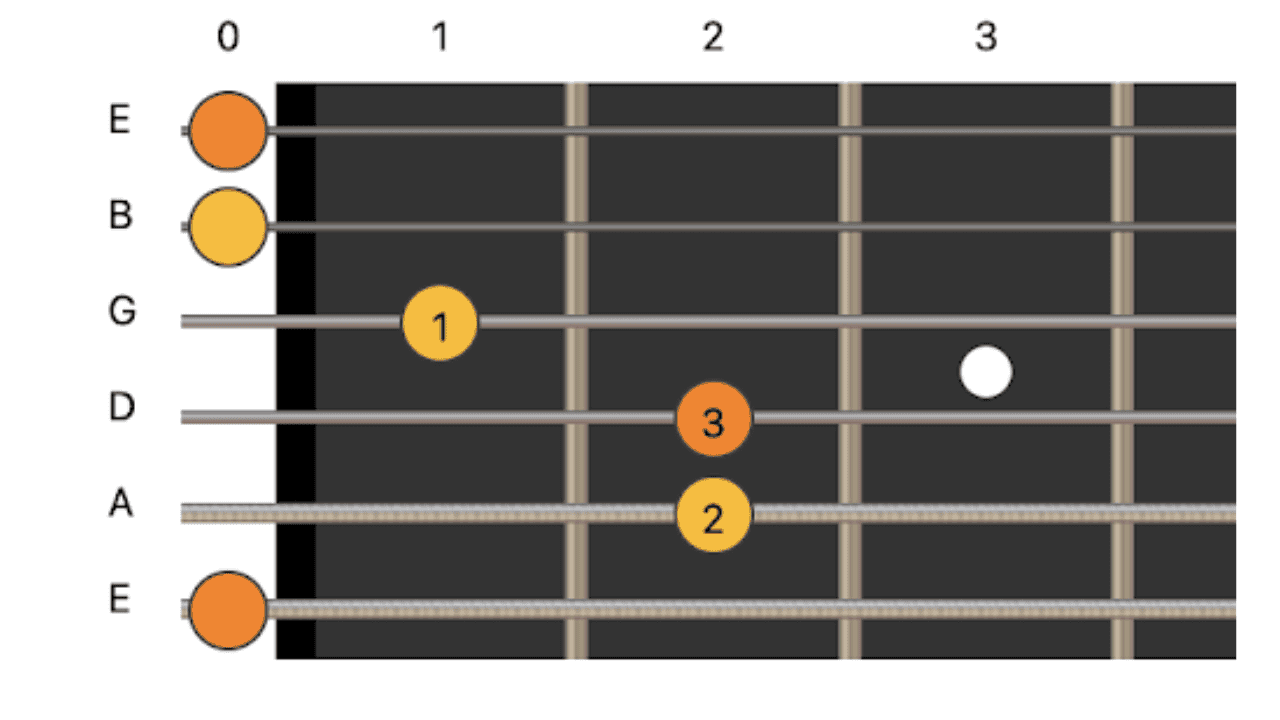
Quick reminder: Place your finger as close to the fret as possible, but don’t touch it to avoid buzzes. Another thing to remember is to start strumming only using downstrokes and counting in a group of four.
The E7 chord is just as easy to play as the E chord.

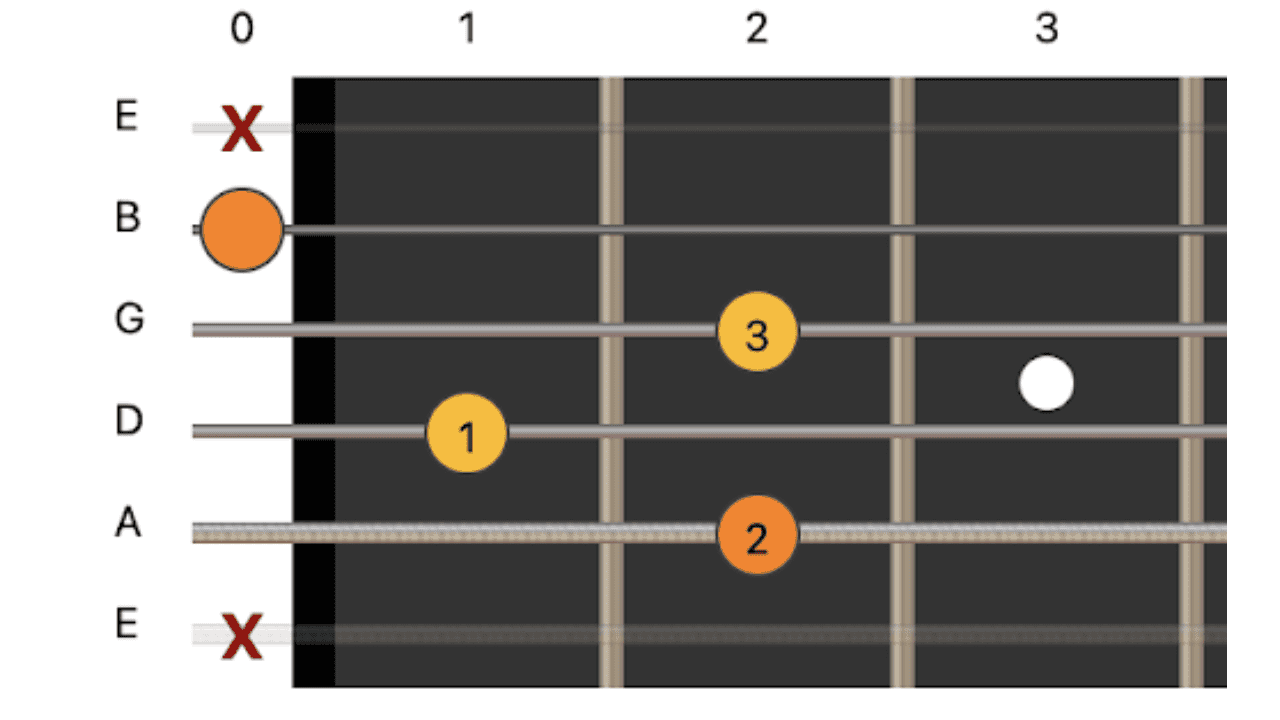
As you can tell from the tablature, you only need to raise your ring finger to go from the E to the E7 chord.
Alternative chords: To make the chord sound more bluesy and tense, you can stretch the pinky slightly and place it on the 3rd fret of the B string.
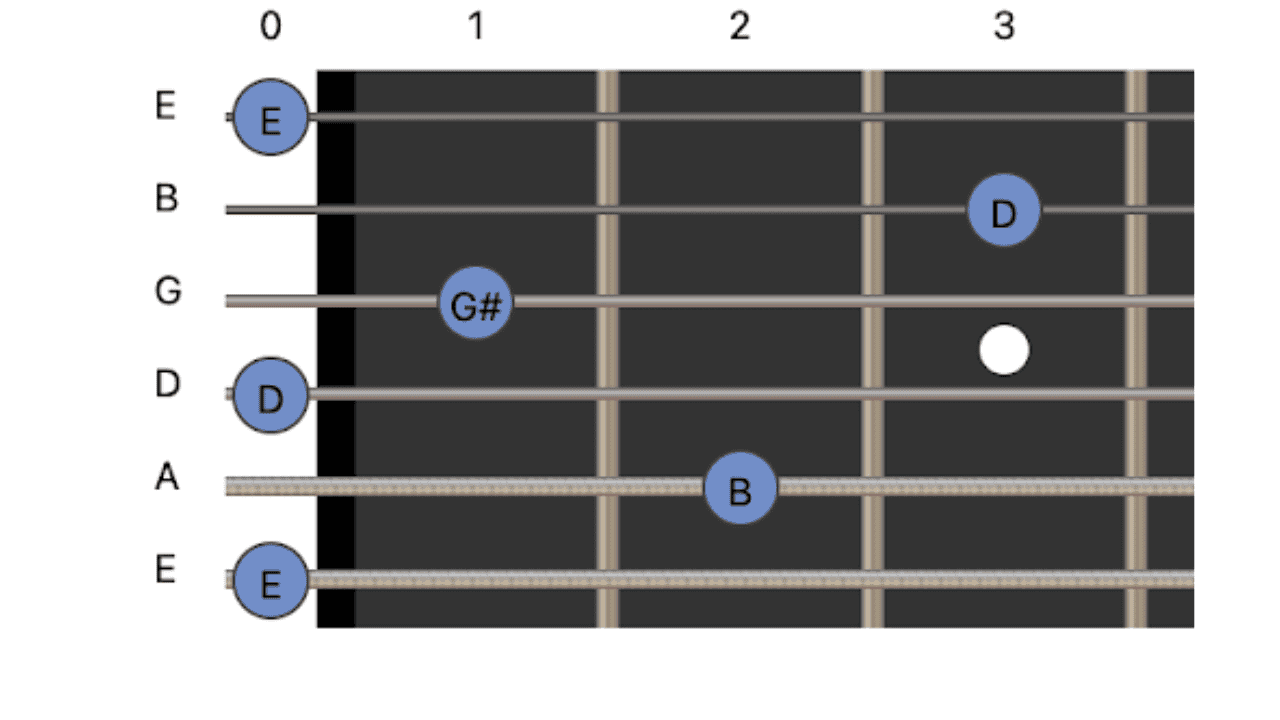
Alternative chord: This is a ‘special’ chord that blues players often use in their rhythm playing. It sounds great on an acoustic, but it truly goes through even better on an electric with some overdrive on.
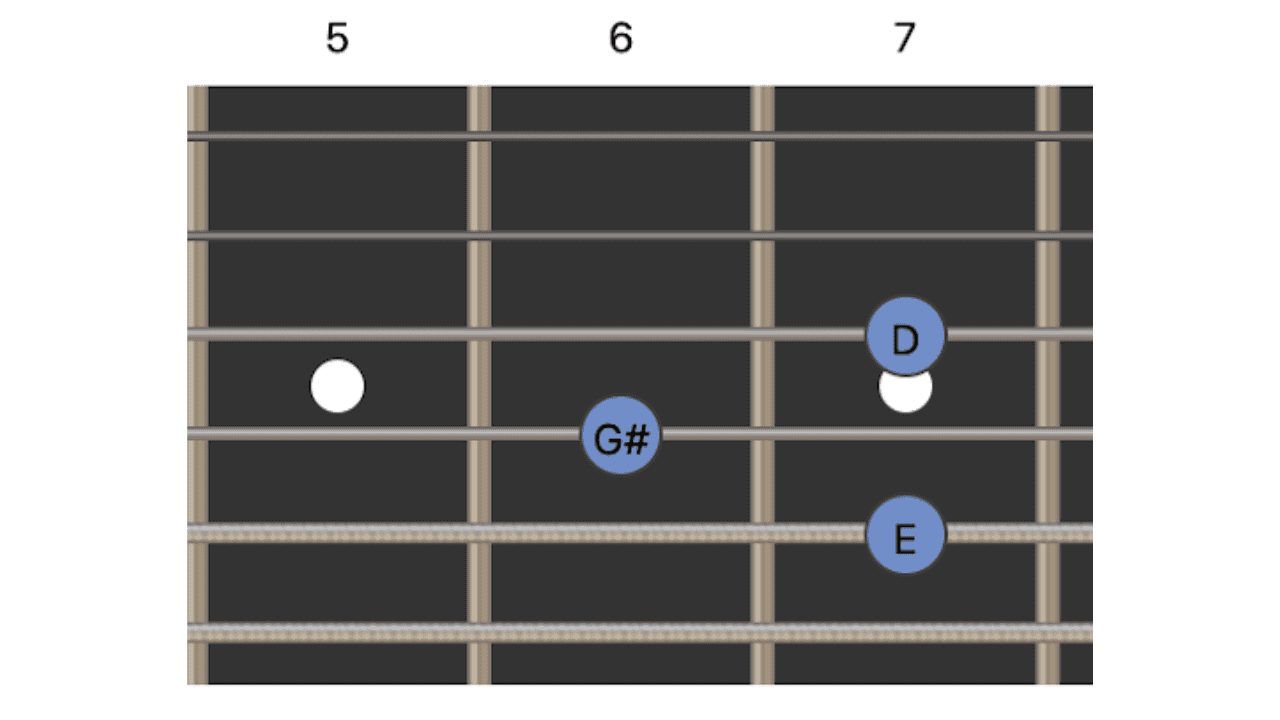
Quick Tip: When first playing the chord, try to pick the strings individually with your thumb or the pick. Once you make sure there are no buzzes or muted notes, go for a strum.
Now, let's take things up a notch and go into the E7 barre chord. If you're new to barre chords or still find them tricky to play, get familiar with the chord's shape first as we are covering some way to help you with the barre.
To play the E7 barre chord, do the following:

Beginner Tip: Playing barre chords high up the neck is easier, as the frets get shorter and shorter the higher you go. If you are new to this, the E7 is the perfect chord to get started on!
Even so, start by playing each note individually and make sure the ring is out; if not, focus on the ‘problem’ before going for the strum. The tips section below will massively help with that.
Now, let's explore how the E7 is formed and the ‘why’ behind the seven. This is not a theory lesson per se but a practical approach that will serve you soon.
In a nutshell, all you need to know is this.
The formula for major chords is: 1st, 3rd and 5th
The E major scale notes are: E, F♯, G♯, A, B, C♯, D♯
The notes of the E chord are: E, G#, B,
Quick Challenge: If you know the notes on the neck, try to find the scale. If not, then it's time you put some effort into learning the notes on the fretboard.
7th chords are slightly different from major chords, as they are not formed from three but from four notes. To find the fourth note, we only need to go one step or two frets to the left of the E note (7th fret of the A strings), which is the note D. The note is not found on the E major scale, and is called a flat seven (b7).
The formula for 7th chords is: 1st, 3rd, 5th, b7
The notes for the A7 chord are: A, G#, B, D
Theory Tip: Seventh chords are often called dominant seventh or dominant chords. You will hear musicians all the time refer to these chords with this name, and now you know that it simply means a 7th chord.
This is the part where I will share how to get the E7 chord to sound clean and what are the common mistakes beginners make when learning new chords.
When playing chords, you want the thumb to help the hands so that the chords avoid buzz notes and muted strings.
You should position the thumb as much as possible close to the middle of the back of the neck. This way, you ensure your fingers land straight down the frets and that no finger blocks strings from ringing accidentally.
If your wrist hurts the first few days, it's normal, and you shouldn't panic. Remember to take breaks in between practising and stop if the pain is overwhelming.
Classical players all use the same 'trick’ to easily play the tricky parts. Instead of holding the guitar as you would normally on the right lap, they position themselves more 'formally’ in a straight position that helps your hands and back.
Follow these steps:
Notice how much easier it is to stretch your left hand and how natural the right hand feel when picking the strings or strumming. You don't have to hold the guitar always like this if you don't want to, yet it's a good position to start with and avoid future back pain.
No one guides you on how hard to strum or how hard to press down the strings. In both cases, it's a learning-by-doing process, but there are some things to pay attention to.
To work around this and learn the right way to both quickly, try the following:
Apply the same principle to strumming. Start by playing hard and going soft until it feels just right. It won't happen in a day, but the reward is massive.
Bar chords are tricky, but there are ways to make them easier to play.
Again, improvement takes a few weeks of doing this constantly, but it will be very apparent when it happens.
Most songs are made of different chords played one after the other. To practice the E7 chord, it's best to do so in context while also changing to other chords and strumming with your right hand.
Here are two other easy 7th chords for which I have written separate articles and in-depth guides. Try to play them along with the E7 Chord.
A7
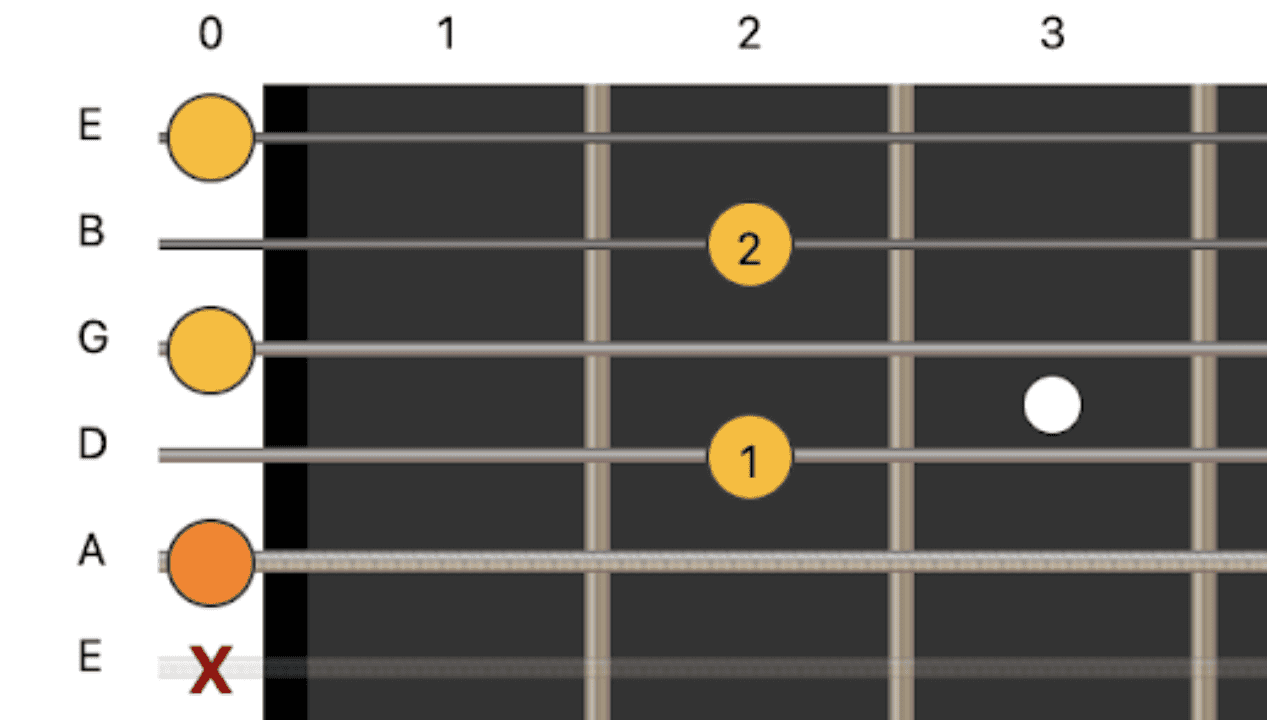
B7
Perhaps it's easy for you to use a metronome, so for now, try to change between each chord smoothly and play four strums of each before changing to the other at a slow tempo.
The E7 chords is everywhere, and I could recommend hundreds of songs for you to play. Here are a few famous ones you might enjoy playing.
The cool thing about the E7 chord is that you can play it over any 12-bar blues in the key of E, and it will work! If you're unfamiliar with the 12 bar, I will cover that in depth in another guide; for now, you should only focus on learning to play the E7 chord cleanly.
Now that you know how to play the chord, the next step is to blend practice with fun and make some time for guitar.
You don't need a lot; it's perfectly fine if you play only 15 minutes daily. My tip is that when you pick up the guitar, leave anything else and only focus on that; it won't only help you get better, but you will also get much more enjoyment out of it!

The actual kit that went around the world in the World in Six Strings footage. Sixteen months, twelve locations, about $900 all in.
Ever hit a G chord that feels bright and settled, then swap to G7, and suddenly it sounds a little…expectant? Like it’s leaning forward, waiting for the next page to turn. That “unsettled” sound is the whole point. G7 is a dominant seventh chord built from G (Root), B (Major 3rd), D (Perfect 5th), and […]
The first time I met B7, my hand froze. Four fingers, tight spacing, and one tiny mistake makes half the chord go dull. That is why I call B7 the Gateway Chord. It pushes your fingers to work as a team. You will hear it in Blues, Folk, Classic Rock, Jazz, and even acoustic metal […]